
About:
Artist: Andreas Brorsson Trio (ABT)
Release Year: 1995
Description: Andreas Brorsson Trio (ABT)
Andreas Brorsson Trio, commonly abbreviated ABT, was an experimental music collective from Umeå, Sweden, active primarily during the late 1990s and early 2000s.
Despite its name, the group rarely conformed to either part of that description. There were often only two musicians on stage,
and on at least one occasion the "third member" was a Farfisa organ.
During another period the group expanded to seven performers, none of whom happened to be named Andreas Brorsson.
At its core, however, ABT revolved around the creative partnership between Magnus Lassila and Andreas Brorsson.
Together they explored a musical landscape where jazz, ambient music, improvisation, spoken word, sound collage and outright absurdity coexisted happily.
Rather than composing songs in a traditional sense, ABT preferred to create situations and see what emerged.
The group's performances were almost entirely improvised. Written scores were nonexisting.
Instructions such as "You are a comet", "Scare someone", "Give attention" or "Take attention" were considered sufficient preparation for a concert.
One of the group's most ambitious performances took place during the Umeå International Jazz Festival, where the ensemble was expanded into a large improvising group.
Each musician received a stack of instruction cards containing more than one hundred prompts, creating a constantly shifting social and musical landscape.
The result was equal parts concert, experiment and controlled chaos.
ABT was a common recurrence at the Umeå International Jazz Festival.
ABT's recordings followed the same philosophy. Much of the material was captured live and released with minimal editing.
The focus was not on perfection but on documenting unique moments that could never be repeated.
As a consequence, many recordings feel less like albums and more like field reports from strange musical expeditions.
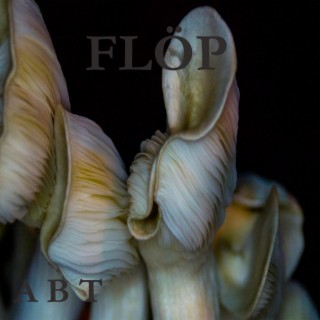
Their 1997 album Flöp remains one of the group's most defining works. Recorded simultaneously in two separate studios at Tullkammaren in Umeå,
the musicians deliberately avoided visual communication and relied solely on what they could hear.
The unusual recording setup created unexpected interactions and a distinctive sense of distance and connection that still characterizes the album today.
Most of ABT's output was originally recorded to cassette tape, giving the music its characteristic lo-fi texture of tape saturation,
mechanical noise and happy accidents.
Recordings from this era were later collected and revisited through releases such as Forgotten Pieces: Lost & Found, which unearthed demos, rehearsals and live performances from the project's first decade.
Eventually the project evolved and transformed into Le Petit Déjeuner, but the spirit remained the same: curiosity over certainty, improvisation over composition, and the belief that music could be discovered rather than written.
Whether performing for a handful of friends or on a festival stage, Andreas Brorsson Trio treated every performance as an opportunity to ask a simple question:
"What happens if we try this?"